Role
Research, UX Strategy, Workshop Design, Visual Design, CAD, Prototyping & Physical Computing
Embodied:Intent
Embodied:Intent explores how abstract design decisions can become tangible experiences. By combining UX research, physical computing and workshop facilitation, I created a hands-on experience that helps product teams reflect on how trust is shaped long before users notice it.
Unfortunately, the video is only available in German. Sorry!
Research, UX Strategy, Workshop Design, Visual Design, CAD, Prototyping & Physical Computing
1,5 months research
3 months project
Independent project
Bachelor Project, User Experience Design
This project started with a 1,5 month research phase. During my research on trust in human-machine interaction, I kept running into the same paradox. Every product team agreed that trust matters. During 6 interviews with experienced UX designers, yet almost nobody could explain how their day-to-day design decisions actually shape it.
Trust wasn't ignored. It was simply too abstract to influence everyday product decisions. Furthermore, close deadlines, unrealistic goals, and competing priorities often pushed trust considerations to the background.
Additionally, the fact that trust is a very abstract concept - and is perceived differently by each stakeholder - doesn’t make things any easier. For example, a developer might be satisfied as long as the product works, but a designer might feel that the emotional connection needed for customer loyalty is missing, and a project manager might consider time too precious to go through another iteration.
Topics I started to explore:
Teams need opportunities to reflect on how product behaviour shapes users' perceptions before products reach the market.
The impact of design decisions on trust is often invisible and difficult to grasp.
Teams need a common language to discuss trust across disciplines.
The deeper I explored the problem, the more I realized that trust isn't something teams can simply discuss into existence. Frameworks, guidelines and principles create awareness but they rarely change the way decisions are made.
Trust is built through experience. Not through presentations. Not through checklists. But through moments that make invisible consequences visible. That realization became the turning point of the project. Instead of creating another framework, I began designing an experience.
With this realization, trust doesn't emerge from interacting with a product once. It develops through interpretation, discussion and shared understanding.
I therefore designed an interactive workshop where product teams could experience the impact of design decisions before reflecting on them together. Rather than teaching principles of trustworthy design, the workshop encourages participants to observe behaviour, challenge assumptions and develop a shared language for discussing trust.
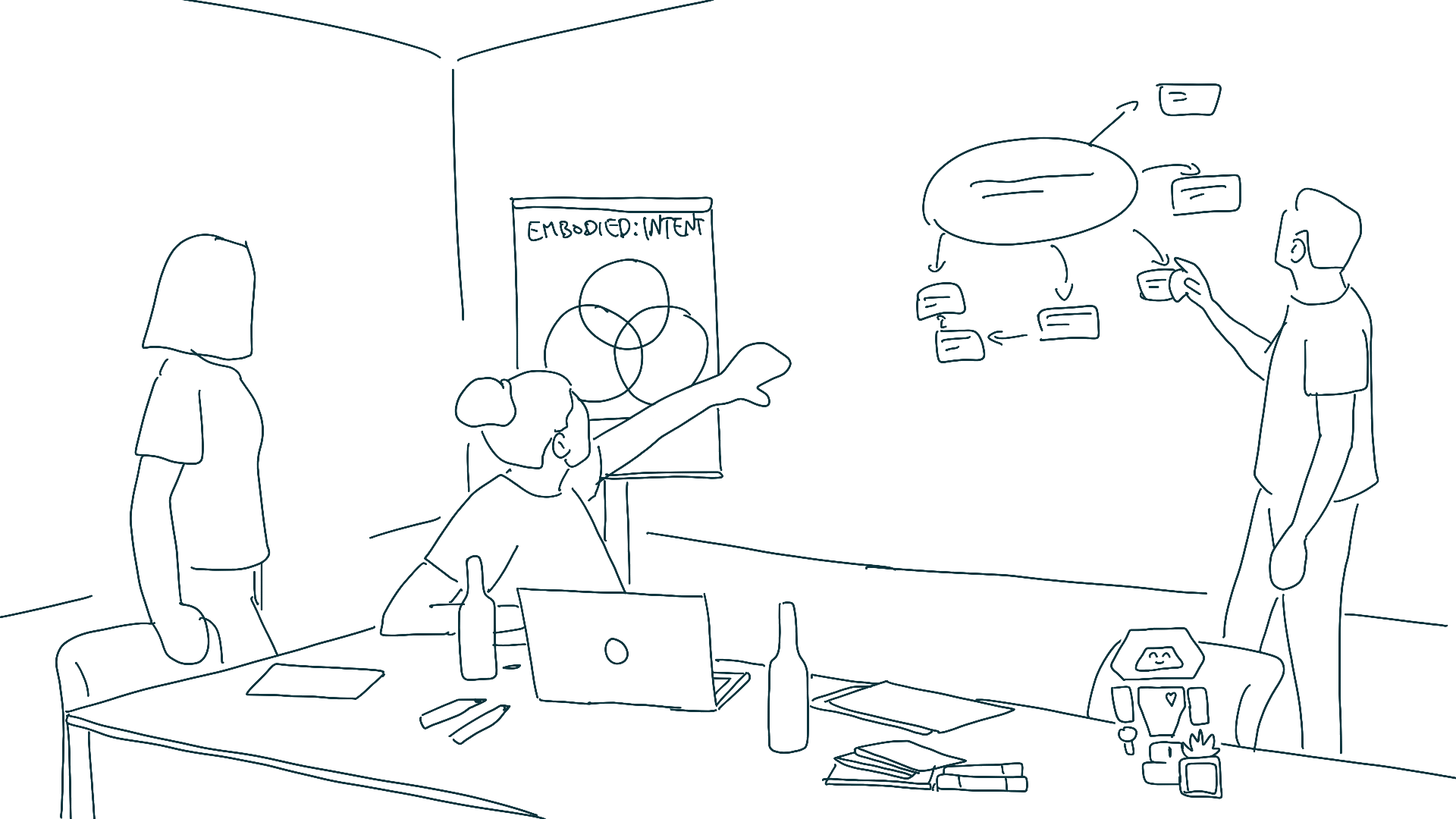
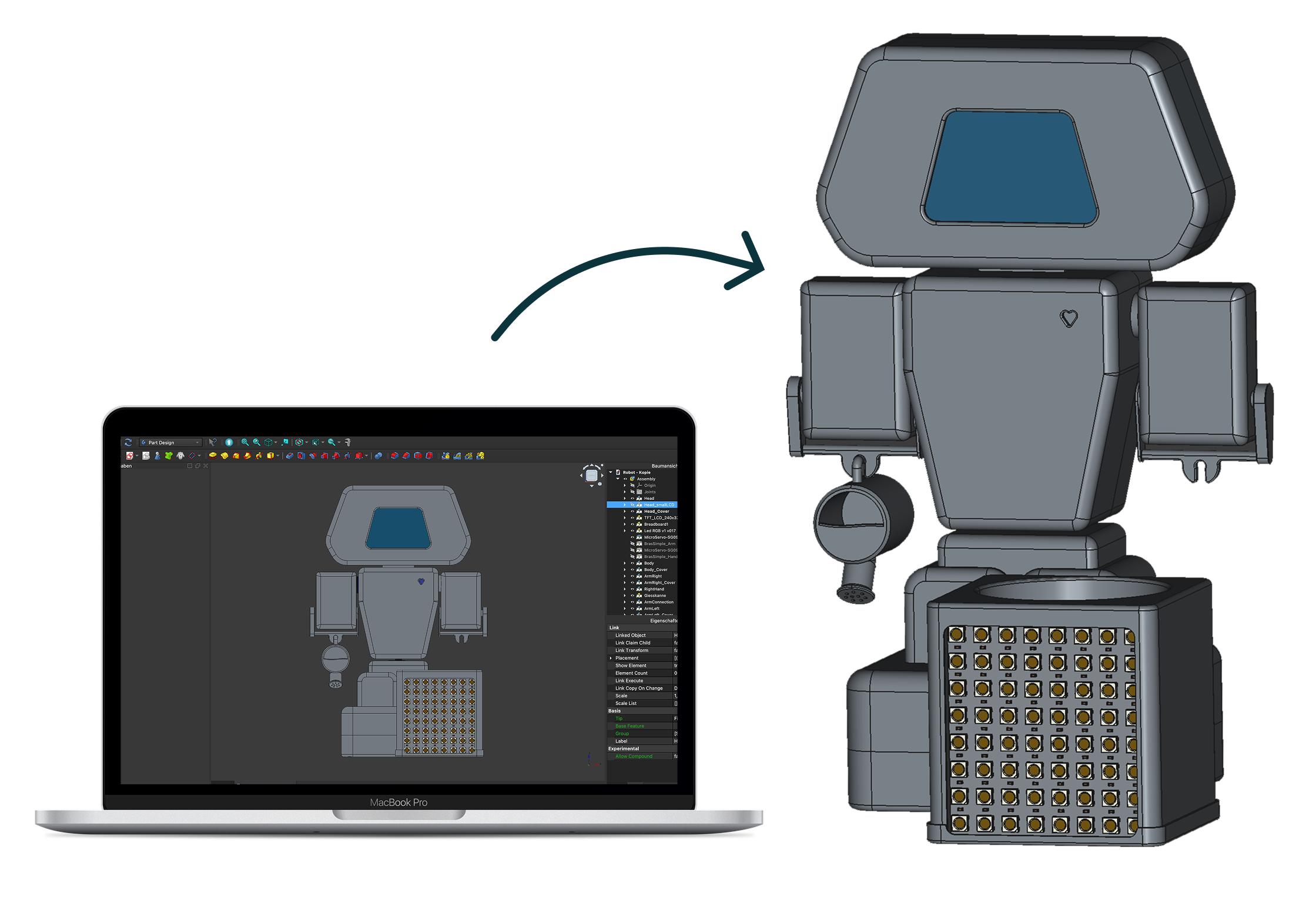
The behavior and effects of digital products are often invisible. I needed a way to externalize the behaviour of a digital system to make it observable, discussable and emotionally relatable for product teams. Instead of designing another interface, I designed a physical representative of a digital product - a robot named Klausi.
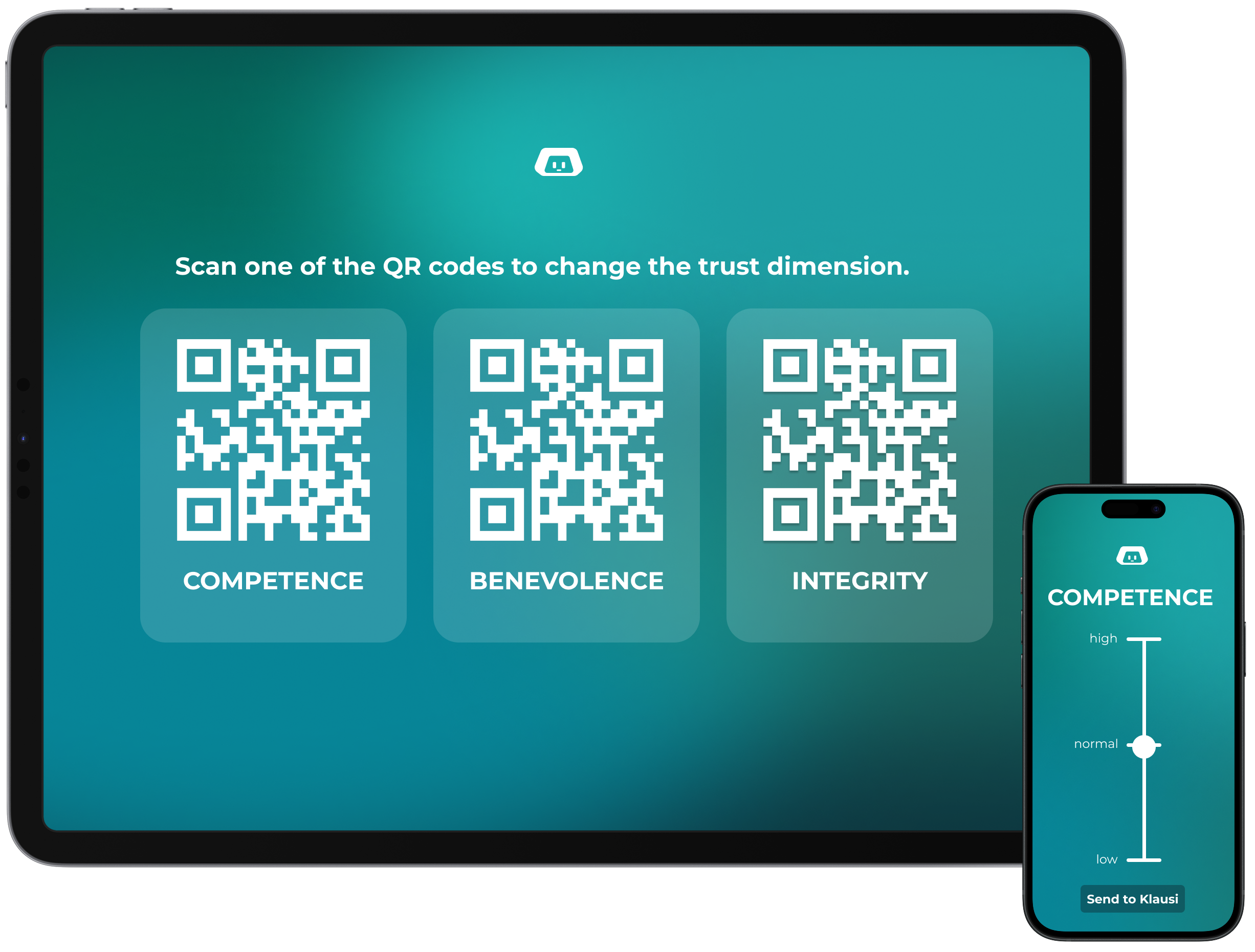
The robot doesn't represent a specific application. He represents behaviour. By changing the way he waters a plant, participants experience how seemingly small design decisions influence perceptions of competence, benevolence and integrity - the basis of trust - when they change specific attributes of the robot via a webinterface.
But why a robot? The fact that participants work with a physical object changes how they perceive the entire project and the workshop. People attribute a “more genuine” value to physical objects because a stronger psychological connection can be established. Digital objects, on the other hand, are often perceived as fleeting. In addition, touching different surfaces (paper vs. touchscreen) activates different areas of the brain. It has been proven that for example text in printed books is processed more deeply and remembered better because the brain spatially locates the information on the pages. That is exactly what the robot is meant to convey.
Fun Fact! The sense of touch is the first sense we develop as humans. Even today, it continues to have a profound influence on how we perceive the world around us.
Designing the robot wasn't about creating personality. It was about translating abstract design principles into observable behaviour. Every movement, pause and reaction was intentionally designed to communicate a different quality of trust. During my research, I identified the following characteristics that are necessary for trust. Some are more pronounced, while others are less so.
Rather than asking participants what trustworthy design means, the workshop allows them to experience it first and reflect on it afterwards. The robot becomes a conversation starter, a shared point of reference and a physical reminder that every digital interaction communicates something, even when the interface seems invisible.
Creating the experience required much more than designing a workshop. It meant translating an abstract research topic into something people could see, feel and remember. Every design decision from the workshop structure to the robot's behaviour served the same purpose: making trust tangible.
Furthermore, this experience should not only be present during the workshop but should also continue to resonate afterward. For this reason, the various phases of the workshop were developed, which are described in more detail below.
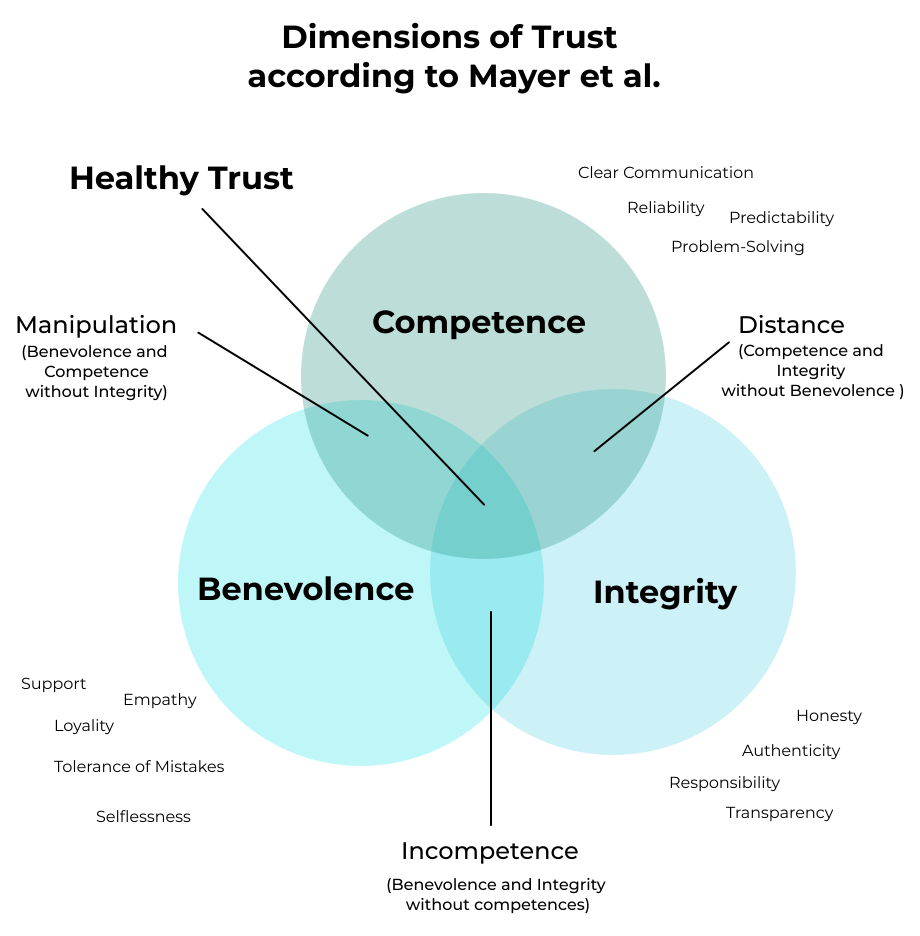
The project began with an extensive research phase exploring how trust is formed in interactions between people and digital systems. Through literature review and expert interviews, I identified three core dimensions that shape trust: Competence, Benevolence and Integrity. While these concepts are well established in theory, I discovered that they rarely become part of everyday product decisions.
This insight became the foundation of the entire project.
Rather than trying to solve every aspect of the problem, I focused on validating the core hypothesis behind the project: If trust is experienced rather than explained, can physical interaction help product teams make better design decisions?
The outcome is not a finished product, but a proof of concept that demonstrates the potential of experiential learning in strategic product development.
| In Scope | Out of Scope |
|---|---|
|
|
The challenge wasn't to explain trust. It was to make people experience it. I designed a workshop that gradually moves participants from individual observations to shared decision-making. Each activity builds on the previous one, allowing teams to first experience behaviour, then reflect on it and finally translate those insights into concrete design principles for their own products.
Instead of searching for the "right" answers, the workshop creates space for discussion, negotiation and collective reflection.
Workshop Phase 1
After a short introduction, participants individually write down what makes them trust or distrust digital systems. They then introduce themselves, share one trust-related aspect, and collaboratively cluster their cards according to the three trust dimensions (Competence, Benevolence, Integrity).
75 min (including a 10 min break)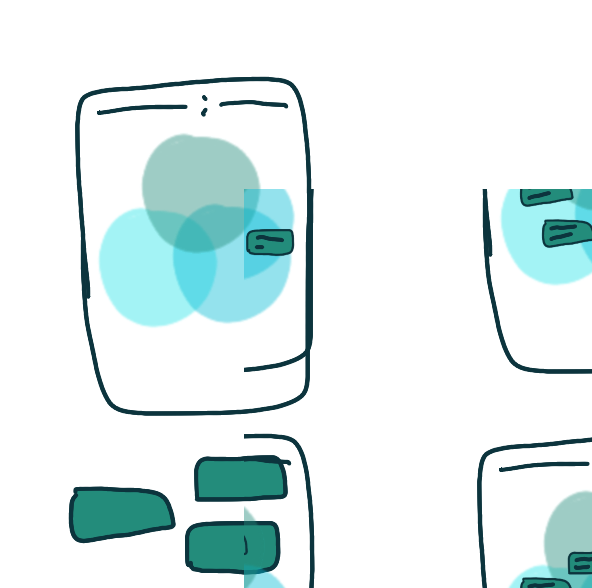
Workshop Phase 2
Working in teams of three, participants interact with the robot, experience different system behaviors, and document on a reflection card what the system did, what they expected, and which trust dimension they believe was affected.
90 min (including a 15 min break)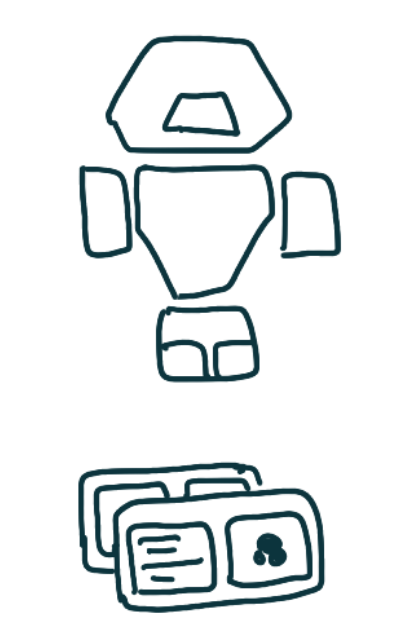
Workshop Phase 3
Participants discuss and analyze their observations, identifying which system behaviors increased or decreased trust, which expectations were met or violated, and which design decisions may have caused these effects. They then relate their findings to the three trust dimensions.
75 min (including a 10 min break)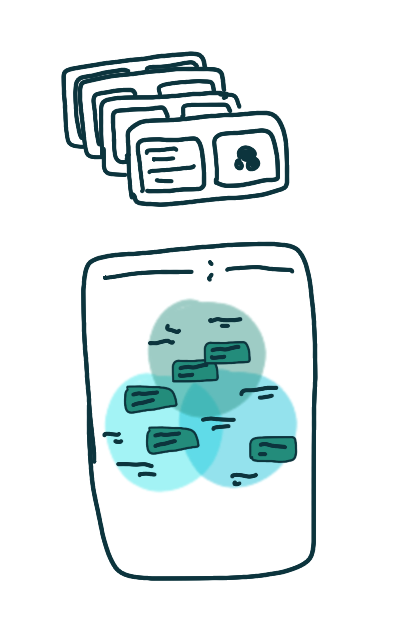
Workshop Phase 4
In teams of three, participants formulate key values and guiding principles for their own product based on previous insights. They present their ideas and collaboratively prioritize them into five core values.
60 min (including a 10 min break)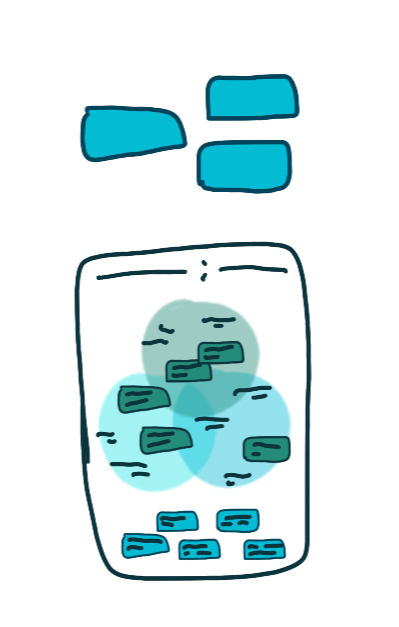
Workshop Phase 5
As a group, participants translate the identified core values into concrete actions and decision-making principles. They define responsibilities and agree on the next steps for integrating these principles into their development process.
75 min (including a 10 min break)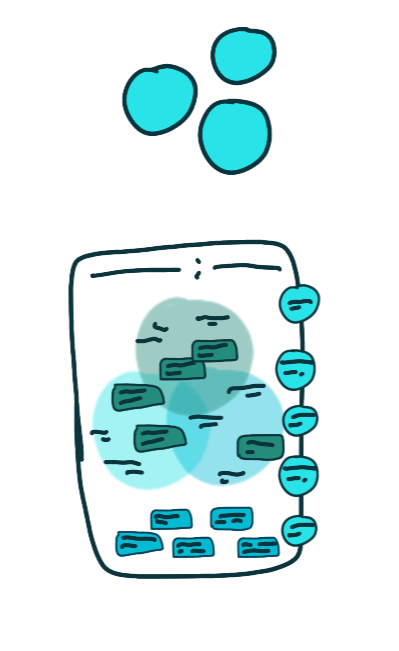
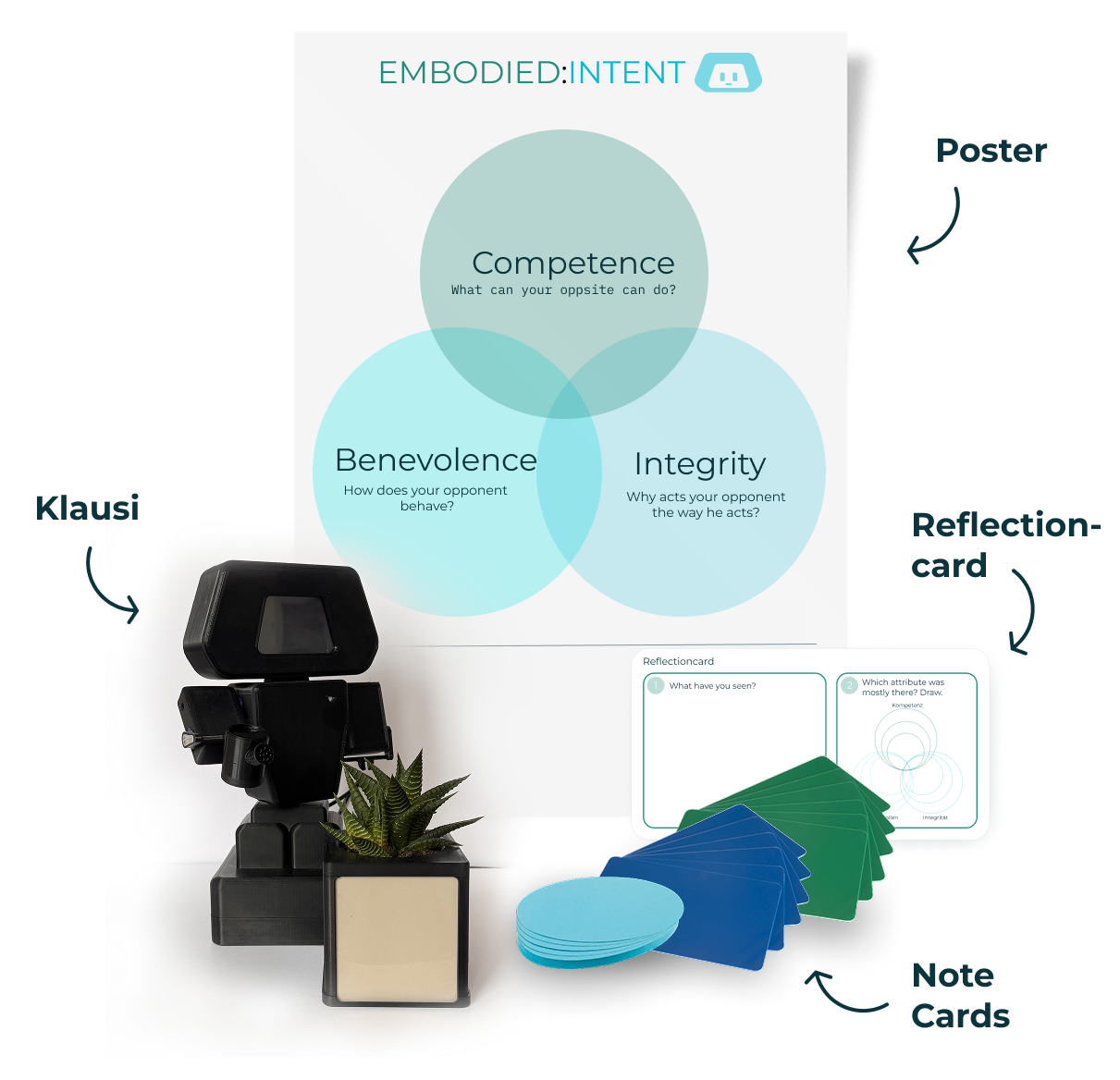
The robot wasn't designed as a product. It was designed as a behavioural system. Every movement, pause and reaction was intentionally crafted to communicate different qualities of trust.
Instead of relying on facial expressions or speech, the prototype explores how behaviour alone can influence the perception of competence, benevolence and integrity. Designing these interactions became an exercise in behavioural UX rather than interface design.
Attributes: K=Competence, W=Benevolence, I=Integrity.
Intensity: 1=low 2=normal 3=high
To change Klausi’s behavior, participants need a smartphone. They use it to scan one of the QR codes displayed on Klausi’s iPad. Each QR code can only be scanned once per round. The three QR codes represent Competence, Benevolence, and Integrity, respectively. Participants then set the intensity for each of the three values and send it to Klausi. Once Klausi has received all three values, he waters the plant according to the values sent, as shown in the table above. The iPad also displays his thoughts and what the participants need to do next.
To bring the concept to life, I stepped beyond traditional UX design. I designed the robot's enclosure in CAD, researched and selected the hardware components, built the electronics, developed a browser-based control interface and programmed the behavioural logic using Arduino with AI-assisted implementation.
Working across industrial design, physical computing and interaction design allowed me to prototype the complete experience rather than only illustrating it. The result isn't a polished product. It's a proof of concept demonstrating how physical interaction can support strategic design conversations.
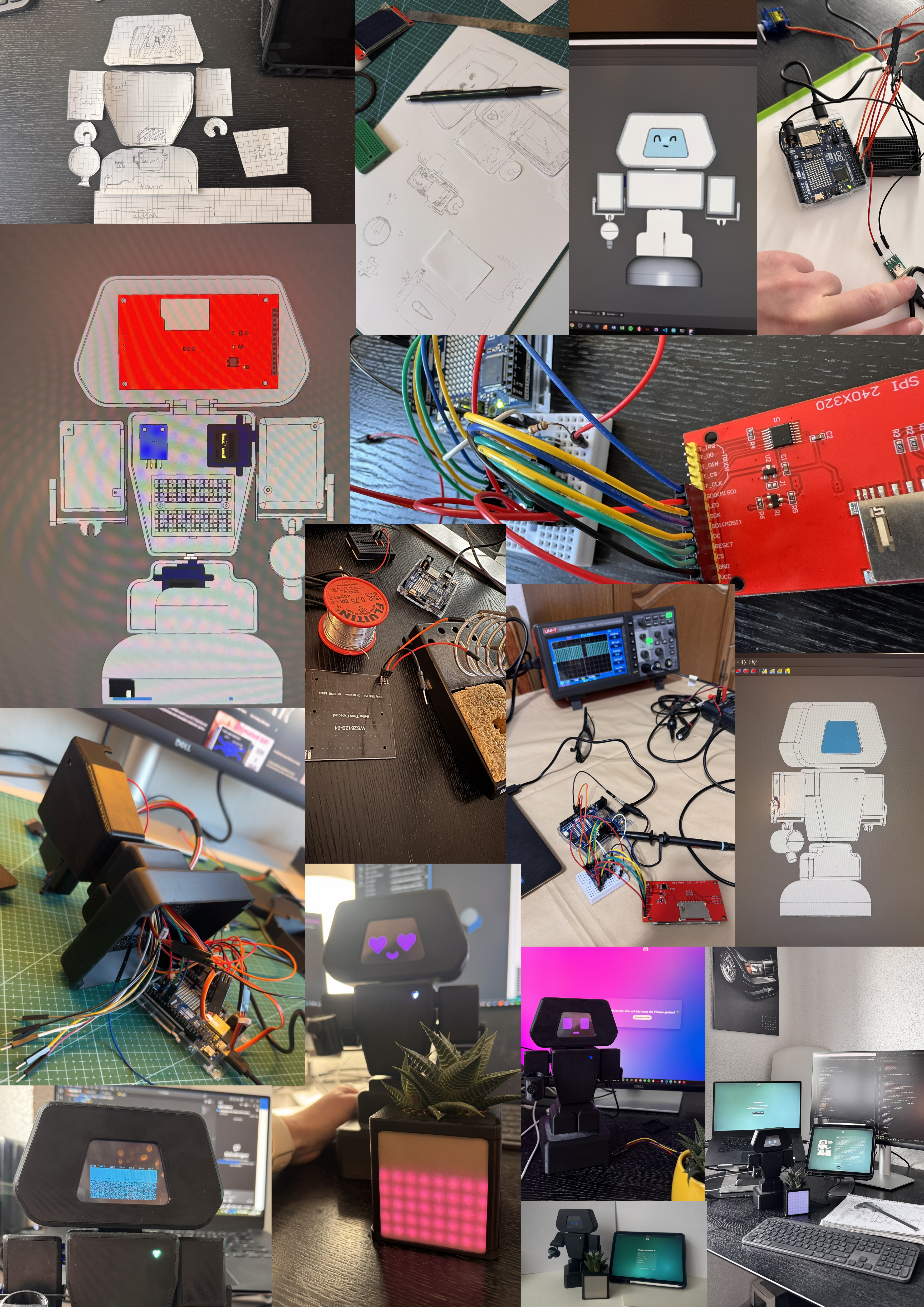
This project was developed independently within a three-month timeframe. The original concept envisioned 27 behavioural expressions. For the prototype, I implemented three fully functional behavioural states that were sufficient to validate the interaction concept.
Unlike in the workshop’s vision, the three preset behavior patterns could be selected directly on the iPad in the prototype. It would therefore still need to be tested how it feels when the values can be adjusted individually using a cell phone, and whether users recognize that these adjustments then contribute to changes in Klausi’s behavior.
Several technical decisions were deliberately pragmatic. Looking back, I would choose a different hardware architecture to enable true parallel processing and richer behavioural interactions. These constraints became an important reminder that prototyping isn't about building everything. It’s about building enough to answer the right questions.
This project changed once again how I think about design. Building every part of the experience myself from research to hardware gave me a deep understanding of how different disciplines contribute to a single user experience.
At the same time, it highlighted the value of collaboration. Many aspects of the robot's behaviour were based on informed design decisions, but they remain hypotheses that deserve further validation with users and experts from fields such as behavioural science and physical computing.
If I continued this project today, I wouldn't start by adding new features. I'd start by building the right interdisciplinary team.
Rather than offering a framework to follow, Embodied:Intent proposes a different way of approaching trust in product design - by transforming abstract concepts into shared experiences that inspire reflection, dialogue and more intentional design decisions.
My 3 key takeaways from this project are:
Making invisible design decisions visible through experience.
Building a common understanding of trust across interdisciplinary teams.
Translating theory into meaningful product conversations before implementation.
Theresas Artwork
I designed and developed the complete digital presence for my own art business, from brand identity and user experience to a custom-built website and social media presence. The platform was iteratively improved through user feedback and has since generated commissions from clients across multiple European countries.